
Youth Health and Wellbeing (SRH)
The Youth Health and Wellbeing Program is Tai’s integrated approach to improving the health, safety, and wellbeing of adolescents and young people through storytelling-led social and behaviour change communication.
Why is the Youth Health and Wellbeing important to Tai?
Tai’s focus on this topic is rooted in the social barriers that young people face in Tanzania. Tai recognises that these issues are not only individual problems. They are strongly influenced by social norms, reelationships, families, communities and institutions.
The program addresses key challenges affecting young people’s development and access to education, including puberty, gender-based violence, early and child marriage, teenage pregnancy, menstrual health and hygiene, sexual and reproductive health, mental health and the fear of discussing sensitive topics openly.
During its early years, Tai worked mainly through traditional school and community awareness sessions. Through this experience, Tai realised that many issues affecting young people including menstrual health, sexual and reproductive health, gender-based violence and child rights were difficult to discuss openly. This experience became an important reason for Tai to move away from purely information-based awareness campaigns towards participatory storytelling and dialogue.
Tai's strategy highlights adolescent pregnancy as an important indicator of the challenges surrounding adolescent wellbeing and reproductive health.
According to the 2022 Tanzania Demographic and Health Survey, cited in Tai's strategy:
22% of adolescent women aged 15–19 had ever been pregnant.
This includes adolescents who had already given birth or were pregnant at the time of the survey.
This statistic helps demonstrate why adolescent sexual and reproductive health is an important area of concern within Tai's broader youth-development work.
Tai does not approach SRH simply as a matter of providing information.
The organisation's strategy suggests that young people need more than knowledge. They also need:
confidence, agency, safe spaces to discuss difficult issues, supportive relationships, access to appropriate support, institutions and communities that enable them to act on what they know.
We describe these wider factors as social barriers, norms, beliefs, relationships, institutional practices and socio-economic conditions that can restrict young people's wellbeing, inclusion and opportunities.
So, from Tai's perspective: SRH is not only a health issue it is also a social and behavioural issue.
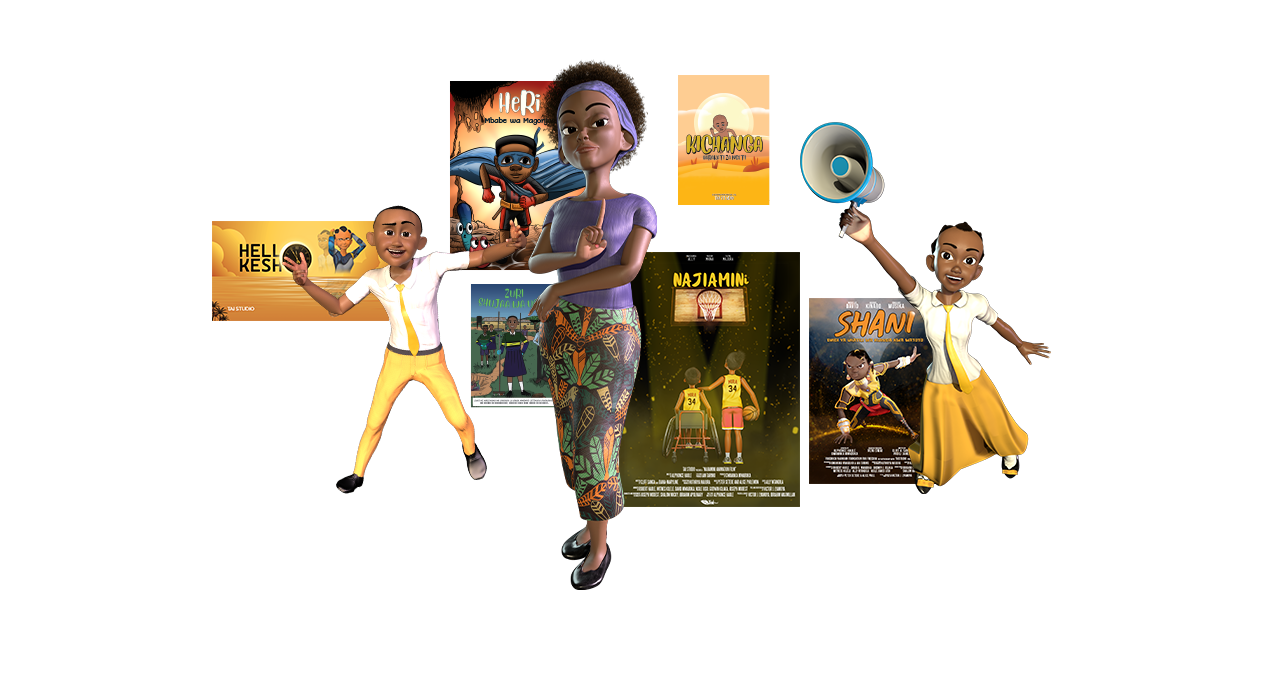
Rather than relying on didactic messaging, the program uses animation-based learning, radio drama, comic books and facilitated dialogue to create structured spaces for reflection, participation, and behaviour change. This approach ensures that young people are not only reached with information, but actively engaged in interpreting and applying it in their lived contexts. Next to the animation-based learning we want to ensure that young people have a safe and supportive surrounding through community engagement such as working with parents and caregivers, engaging teachers and community leaders, youth engagement such as youth ambassadors, school clubs and story labs and didgital & blended learning with our application Tai Academy.
Thats why our programme extends beyond schools to engage parents, caregivers, educators, and community stakeholders, recognising that sustainable change requires alignment across the broader social environment.
Harakati za Ngeti, the flagship project under this programme since 2019, delivers these interventions at scale across schools and youth centres, combining storytelling, dialogue, and community engagement to strengthen awareness, shift norms, and support healthier decision-making among adolescents. We have produced more than 30 animations as part of the Harakati za Ngeti project, each addressing one of the key topics within our Sexual and Reproductive Health (SRH) focus areas.
Until today we reached around 1.3 million views on our animations and has reached over 33,000 young people, contributing to measurable improvements in awareness of key SRH issues and strengthening community-level dialogue around adolescent wellbeing.
We look forward to continuing our journey until every young person feels comfortable to open up and speak about their personal problems with their environment if they feel the need to. We stand for a safe and supportive environment.